


n CNC machine calibration, a digital inclinometer is used to check and adjust axis parallelism and orthogonality, ensuring precise geometric alignment and machining accuracy.
In precision machine‑building industries, particularly in CNC and VMC machines, the parallelism and orthogonality of machine components play a crucial role in operational accuracy and product quality. Even minor deviations in these parameters can lead to accuracy loss, increased scrap rates, and potential machine damage.
One of the most effective instruments for measuring and controlling these parameters is the digital inclinometer, which—with its high precision and ease of use—significantly improves the calibration and alignment processes of such machines.ر
اهمیت توازی و تعامد در ماشینهای CNC
In high‑precision machines such as CNC and VMC systems, the alignment of guideways, the orthogonality between axes, and the perpendicularity of the spindle rotational axis to the worktable surface are among the key factors ensuring machining accuracy.
These parameters must be adjusted in accordance with strict quality standards to guarantee the highest precision in cutting, drilling, and milling operations.
For example:
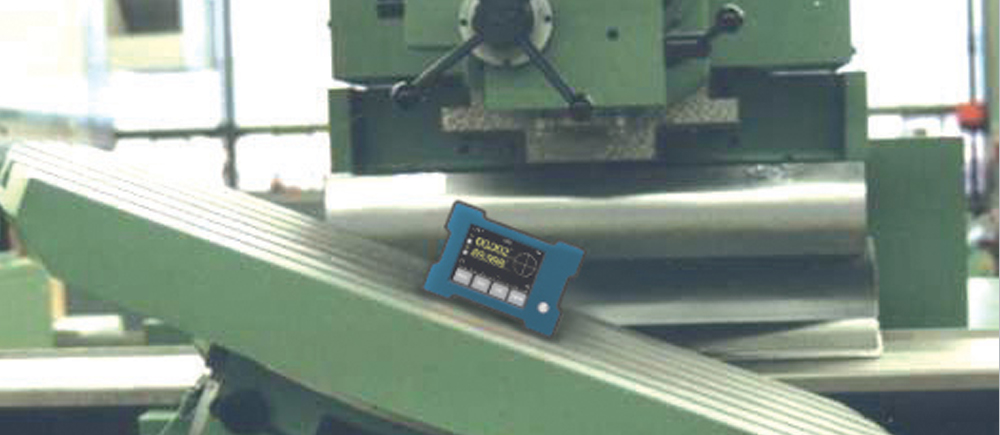
- Guideway alignment (Fig. 2)
- Axis orthogonality (Fig. 3)
- Perpendicularity of spindle rotational axis to the worktable surface (Fig. 4)
All these measurements can be performed using a digital inclinometer. Moreover, for angle or slope milling operations, a dual‑axis digital inclinometer can be utilized.

شکل ۲
Guideway Alignment Measurement Method
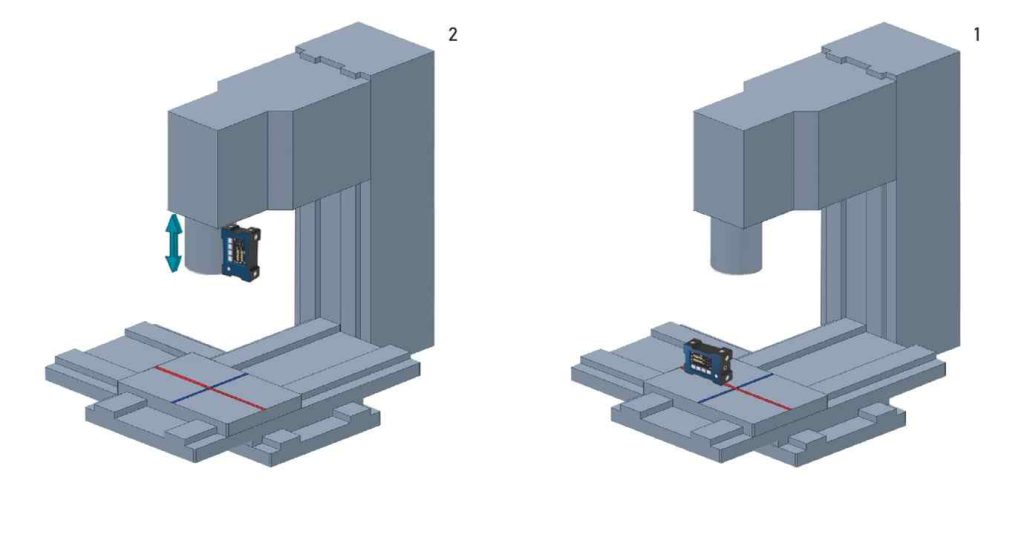
To determine the alignment accuracy of machine guideways, place the digital inclinometer on the worktable surface and move it along the guideway’s length.
When using a dual‑axis digital inclinometer, both types of angular deviations — roll and pitch — can be measured simultaneously in a single step.
This method saves time and enhances the precision of machine adjustment and calibration.
Movement along the X or Y axis for guideway alignment measurement
Axis Orthogonality Control
To measure the orthogonality between the X, Y, and Z axes in a CNC or VMC machine, use a digital inclinometer with a full measurement range.
Place the inclinometer on the worktable surface and set it to zero.
Then position it along the vertical (Z) axis of the machine and check the indicated angle.
If the measured angle deviates significantly from 90 degrees, it indicates a need for axis alignment correction.
By using the Relative mode of the inclinometer, axis orthogonality can be measured accurately even if the entire machine is not perfectly leveled.
- Zero the machine on the worktable surface.
- Record the measured non‑orthogonality value displayed on the screen

شکل ۳-۱

شکل ۳-۲
Spindle Axis Perpendicularity Check with Respect to the Worktable
To measure this parameter:
- Zero the digital inclinometer on the worktable surface.
- Mount the inclinometer along the spindle axis and take readings while moving the spindle vertically.
This measurement determines the deviation of the spindle’s rotational axis from the line perpendicular to the worktable surface, which is a critical factor for precision machining operations.
Key Features of a Suitable Inclinometer for Machine Tool Applications
A digital inclinometer intended for guideway alignment, axis orthogonality verification, and spindle axis perpendicularity inspection should possess the following characteristics:
- Dual‑axis measurement capability for simultaneous acquisition of roll and pitch angles.
- Full measurement range (±180 degrees) to cover all possible machine orientations.
- High thermal stability to ensure consistent performance under varying workshop temperature conditions.
- High accuracy and repeatability to guarantee the reliability of machine calibration and geometric verification results.
شکل ۳-۱
Conclusion
By employing a digital inclinometer in the inspection and calibration of CNC machines, production accuracy and overall manufacturing quality can be significantly improved.
This instrument not only makes the alignment process faster and more precise but also helps prevent mechanical errors and prolong the machine’s service life.
Consequently, investing in high‑precision measuring equipment, such as digital inclinometers, results in higher productivity and reduced maintenance and repair costs.
