


“Behavioral analysis and monitoring of dams using instrumentation and digital inclinometers”
The Importance of Monitoring in Geomechanical Projects
Monitoring is one of the critical stages in geomechanical projects, playing a key role in assessing structural stability and optimizing execution methods. The use of precise instrumentation in these projects enables continuous control of the implementation process and analysis of the structural response, helping engineers evaluate the actual stability condition of a dam or geotechnical structure.
In large-scale projects such as dam construction, monitoring helps prevent potential failures. By installing instruments at key points, performing periodic data readings, and conducting back analysis, it becomes possible to identify probable causes of instability and take corrective measures in time.
Main Stages of Behavioral Monitoring
The process of monitoring dams and geomechanical structures includes the following stages:
- Selection of appropriate instruments for measuring the desired parameters (such as inclination, pressure, deformation)
- Installation of instruments at specified locations based on the monitoring design
- Reading and collecting data from the instruments
- Processing the data and plotting monitoring diagrams
- Analysis and interpretation of curves to identify abnormal changes
- Evaluation of stability conditions and identification of potential risks
- Implementation of preventive measures when signs of instability are detected
- Back analysis to examine actual operational parameters
Essential Characteristics of Instruments in Geomechanical Projects
Given the harsh environmental conditions and the need to measure very small changes, the instruments used must have the following capabilities:
- High sensitivity and measurement accuracy
- Long-term reliability and stability
- Simple calibration and data reading procedure
- Resistance to temperature and humidity variations
- Ease of installation and maintenance
On average, the cost of monitoring in critical geomechanical projects accounts for about 2% of the total project cost. However, this expense is negligible compared to the potential damages resulting from the failure of a dam or structure.
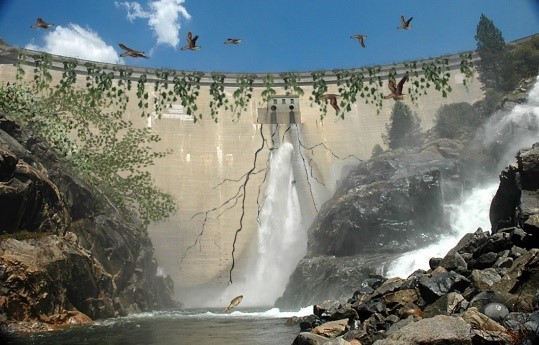
Risks of Neglecting Dam Monitoring
Failure to conduct accurate monitoring and behavioral analysis of dams can lead to catastrophic events. In concrete dams, this issue often manifests as extensive cracking and ultimately total structural failure. In earth dams, dangers such as:
- Piping
- Instability of upstream and downstream slopes
- Water leakage
- Structural cracking
may occur, each potentially resulting in the failure of the structure and causing irreparable damage.
Arching Challenge in Data Readings
One common problem in installing pressure cells is the arching phenomenon. This issue occurs when the soil surrounding the sensor is not sufficiently compacted, causing the pressure applied to the sensor to differ from that on the surrounding area. The consequence is error in the recorded data and erroneous interpretations.
Recent research is introducing innovative installation methods for pressure cells aimed at reducing this problem.
Proposed Solution: Use of the ETC-PRO Digital Inclinometer
For precise monitoring of dam structures and detection of behavioral changes, a chain of ETC-PRO digital inclinometer sensors can be employed. This inclinometer, with the following features, is an ideal choice for dam construction projects:
- Angular measurement accuracy up to 0.015°
- Long-term stability with an error of less than 0.035° per year
- Operating temperature range: –30°C to +70°C
- Dual-axis measurement (X and Y)
- Multi-factor temperature calibration
- IP67 waterproof and dustproof standard
By using these inclinometers on the dam body and crest, even small structural changes can be detected in time, helping to prevent catastrophic failures.


Additionally, to double-check the system and ensure the accuracy of transmitted data, digital inclinometers from the HDI family can be used. These models are equipped with built-in display screens, allowing users to perform periodic data readings. The readings collected by the HDI devices can be compared and correlated with the data transmitted from the chain of fixed inclinometers installed within the dam body.
Given the ease of use of the HDI device, this process can be carried out conveniently without the need for complex auxiliary equipment.
